What if you could create compliance training that learners actually wanted to complete, that they cared about? Imagine creating courses that did more than check a box, that actually increased the odds that employees would follow the policy. To create compliance training that learners care about, they need to know both why and when the policies matter.
Compliance training is often boring
As instructional designers, we often build a lot of compliance training. All those policies and regulations that affect our organizations need to be trained. Unfortunately, compliance training is often just a content dump with a narrator reading the policy, followed by some multiple choice questions to see if learners remember what they heard 5 minutes earlier.
This training can be so boring that organizations have to offer bribes (“You’ll be entered in a drawing!”) or threats (“Failure to complete this training may result in termination”) to cajole employees into completing the courses. In many cases, companies don’t even really seem to care if employees’ behavior changes due to the training. They just want to check a box that says, “we provided training” to cover themselves legally.
If you’re training food production workers on personal hygiene policies, you could simply list the rules. However, just telling people the rules isn’t always enough to convince people to follow them. Have you ever driven faster than the speed limit—even when you knew what the limit was? Knowing the rule isn’t always enough.
Show a worst case scenario
Instead of focusing on just the policies and regulation in abstract, engaging compliance training focuses on when employees need to follow those policies and why they matter.
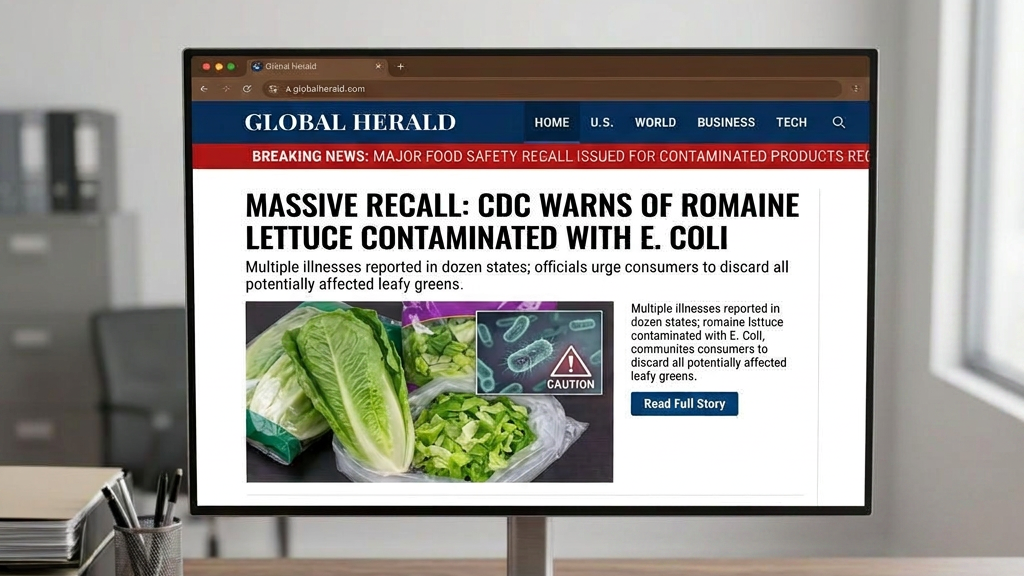
To show the “why,” start with an example of what can happen if they don’t follow the policies. In the case of food safety, it’s easy to imagine a worst case scenario with a nationwide food recall. In fact, almost 15 years ago, I built a mockup of a newspaper front page showing a headline about a “Nationwide Food Recall.” While now a news website or social media mockup looks more current, the same example warning feels sadly relevant in 2026.
(As a side note, I used to spend so much time manually building fake examples like this in Photoshop for elearning. This took me a few minutes and 3 iterations with AI. It’s much easier to generate these supporting visuals now!)

What could other worst case scenarios be?
- Ethics: A scandal that causes a company’s stock to drop or legal consequences
- Safety: An injury resulting in missed work, lost income, and a long recovery
- Security: A breach that results in data loss and all the ramifications from that
For any compliance training topic, there’s a consequence if the policy isn’t followed. That consequence can be your opening scenario that draws your learners into the story and gets them emotionally involved.
Compliance training with interactive video
A classic example of this technique is The Lab: Avoiding Research Misconduct. This is an interactive video you can play from the perspective of different characters. The story starts with “a very bad day,” where news reporters are interviewing a supervisor about misconduct. Right from the start, you see the consequences of poor decisions. As a learner, you get the opportunity to go back in time to see how those decisions were made and try to avert disaster.
You might not have the resources to hire actors and film scenarios in multiple locations like this, but you could still provide this kind of setup. It’s easy to mock up a newspaper headline like the one above or a fake website screenshot with trending news.
What if your worst case scenario would be internal, like an employee losing sales or being placed on a performance improvement plan? In that case, even a photo of an unhappy manager with voice over or text explaining the consequences can be effective.
Why the worst case scenario works
The worst case scenario gets learners attention because it shows them why the policy or regulation matters. Instead of the compliance training being just a box to check off, it’s teaching them how to be a hero and prevent a disaster.
It’s important to show these consequences and not just tell them. Simply telling people, “Failure to comply with personal hygiene policies could result in a food recall,” doesn’t have the same emotional impact as showing them a fake headline about a recall for contamination.
Show the “Why” and the “When”
Starting with a worst case scenario is the “why” for a policy. For tips on how to focus on the “when” policies apply, check out my post Creating Motivating Compliance Training. That post describes the difference between a “push” training where you give all the info to learners when you decide and a “pull” training where learners get the policy information they need, when they need it.
Originally published 3/10/2016. Updated 7/6/2020, 8/13/2026.
Upcoming events
Creating High-Quality AI Media: Prompting, Scripts, and Consistency. October 8. Register for the ATD AI Intensive.
Creative Solutions with Twine: Design, Streamline, and Refine Branching Scenarios. October 14. ATD Dallas Learning Technology SIG.
DevLearn

Register for DevLearn by August 14 for the Elite Rate. Save an extra $100 with code CHRISTY.
Branch Smarter, Not Harder: Naming Conventions, Variables, and Bottlenecks in Storyline
- November 3, 2026 at 9:20 AM
- CE01: Storyline & Rise Pro Lab
Cohesive by Design: Generate Consistent AI Icons, Illustrations & Characters
- November 4, 2026 at 10:00 AM
- BYOD (Bring Your Own Device)
Buzz Discussion: Video & Media
- November 4, 2026 at 3:45 PM
The post Make Learners Care about Compliance Training appeared first on Experiencing Elearning.